Posts

Reproduction and Genetics: An online revision course
Image
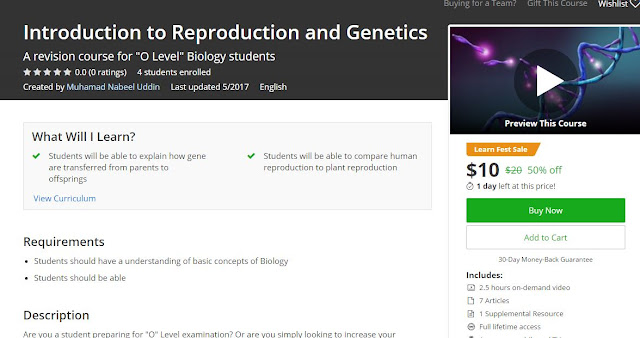
Hello Students. I recently launched a new course: " Introduction to Reproduction and Genetics" on Udemy.com. I wish to encourage you to enroll in this course, which is being offered at a very low cost. If you enroll in my other free courses, and complete 100% of the contents, then I would provide my paid course at a 50% discount. HOW TO ENROLL? You can enroll by first joining  https://www.udemy.com  . Next, in the search box, you can simply type in the name of my courses e.g. Introduction to Reproduction and Genetics or Introduction to Digestion and excretion (FREE COURSE) Alternatively, you can click on this link below to access the course page directly https://www.udemy.com/reproduction-and-genetics CLICK THE IMAGES BELOW TO HAVE AN ENLARGED VIEW Course Landing Page Course outline Contents for Genetics Section Contents for Reproduction Section
Reproduction

Hello everyone. Please check out this course that was made on the topic Reproduction. In this course, reproduction in plants and humans are examined. In addition, two lectures were included to explain the endocrine system. Click on this link below to check out the course :  Biology for O Level Examinations (CXC, GCSE): Reproduction

Lymphatic System

Image
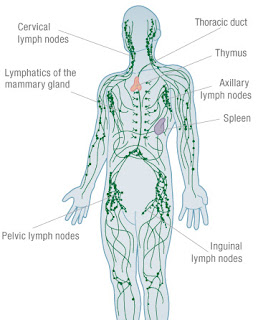
-          Blood transports materials such as oxygen, hormones and nutrients. In order for the nutrients to reach the individual cells, tissue fluids are used. They surround the tissues, and act as a ‘middle man’ between the blood and the tissues. -           The lymphatic system drains this tissue fluid away from the cells using lymph vessels. -           Lymph glands pass to the lymph glands which act as filters. The glands contain many white blood cells. The glands may become swollen during an infection, due to increase production of white blood cells. -           Lymph fluid pass on only one direction, because of the presence of valves (similar to veins) Functions of Lymphatic system -           Transport tissue fluids back into the blood -    ...

Carbon Cycle

Image
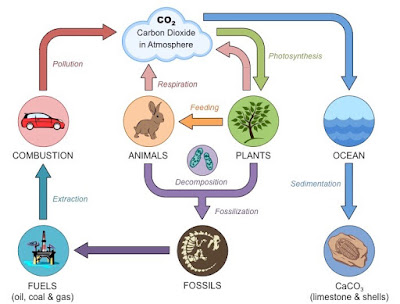
Points to note  -           - Usually, carbon does not exist alone. It forms molecules or compounds. E.g. it can exist as CO 2 and it is also a component of protein, lipids  carbohydrates that found in living organisms -           - Carbon enters the Carbon cycle through photosynthesis when plants, algae or some bacteria use carbon dioxide to manufacture food. -          -  Glucose made, contains carbon (C 6 H 12 O 6 ). The carbon is also used to make plant proteins, and lipids. Therefore, when animals feed on plants, the carbon is transferred to the animals -          -  Plants and animals undergo respiration, and the glucose (C 6 H 12 O 6 ) breaks down. Carbon Dioxide (CO 2 ) is then released into the atmosphere -           - When animals and plants die, or release waste, then microorganisms will feed on the waste, and release...

Nitrogen Cycle

Image
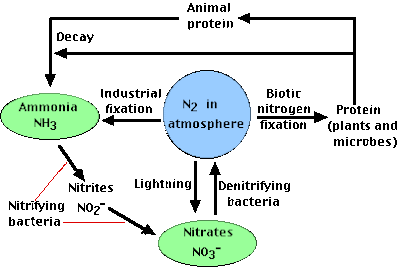
-          -  Nitrogen not used directly by living organisms -          -   Nitrogen gas constitute 78% of the air Nitrogen fixation This describes how nitrogen gas from the air is converted into nitrates. Plants use the nitrates as fertilizer. This occurs by two methods 1.       Lightening : Lightening causes N2 gas to react with H2O molecules in the atmosphere and form ammonia and nitrates 2.       Nitrogen fixing bacteria: some plants, especially leguminous plants, have bacteria living in their root nodules. These bacteria convert the atmospheric nitrogen to nitrates. E.g. of bacteria: Rhizobia Nitrification Animals and plants produce waste. Also, when they die, their body starts to decompose. Ammonia is released, which is then converted to nitrites. The Nitrifying bacteria, such as Nitrosomanas , convert the ammonia to nitrites, and the nitrites to nitrat...

Mitosis

Image
In the video below, the process of Mitosis is explained. 

Skin Bleaching

Image
Skin lightening, or skin bleaching, is a cosmetic procedure that aims to lighten dark areas of skin or achieve a generally paler skin tone. Side effects of skin-lightening creams can include: skin irritation and inflammation (redness and swelling) a burning or stinging sensation itchy and flaky skin uneven colour loss increased risk of cancer Skin whitening creams contain ingredients that act to slow the production of melanin in the skin’s outer layer.