CSEC BIOLOGY 2017 - Paper 01
Posts
CSEC BIOLOGY- Answers 2009 to 2020 January

Click on the link below to view the answer sheet CSEC Biology Paper ONE answers
Udemy Biology Course: DISCOUNT

FINALLY The course YOU have been looking for With 88 % DISCOUNT! CHECK THE LINK BELOW AND VIEW THE COURSE PREVIEW LECTURES CLICK HERE TO ACCESS THE COURSE -> Biology 101: A Complete O Level Course
Free Online Biology course
Hello everyone. Please check out this free course on Reproduction. Before you enroll and view the contents, you would need to create an account on www.udemy.com Click here to view the course page Click here to view the course page I also have three paid courses on Udemy. Please check them out by clicking below: Genetics and Reproduction course
Endocrine System

What is the Endocrine system? It is a collection of glands that secrete chemical messages called hormones. Gland: A gland is a group of cells that produces and secretes, or gives off, chemicals. Hormone: are chemicals that regulate or controls the activity of certain cells or organs The nervous system sends electrical messages to control and coordinate the body. The endocrine system has a similar job, but uses chemicals to “communicate” Endocrine system works more slowly than the Nervous system Hormones are released from glands/cells into the blood vessels They travel to target organs, where they cause a change Endocrine vs Nervous system The nervous system sends electrical messages to control and coordinate the body. The endocrine system has a similar job, but uses chemicals to “communicate” Endocrine system works more slowly than the Nervous system Response of Nervous system is short lived, while response of Endocrine system...
Past CXC Paper 1: Human and Social Biology
Click on the links below to access Past CXC papers Human and Social Biology Paper 1 (2011) Human and Social Biology Paper 1 (2010) Human and Social Biology Paper 1 (2009)
Reproduction and Genetics: An online revision course
Hello Students. I recently launched a new course: " Introduction to Reproduction and Genetics" on Udemy.com. I wish to encourage you to enroll in this course, which is being offered at a very low cost. If you enroll in my other free courses, and complete 100% of the contents, then I would provide my paid course at a 50% discount. HOW TO ENROLL? You can enroll by first joining https://www.udemy.com . Next, in the search box, you can simply type in the name of my courses e.g. Introduction to Reproduction and Genetics or Introduction to Digestion and excretion (FREE COURSE) Alternatively, you can click on this link below to access the course page directly https://www.udemy.com/reproduction-and-genetics CLICK THE IMAGES BELOW TO HAVE AN ENLARGED VIEW Course Landing Page Course outline Contents for Genetics Section Contents for Reproduction Section
Lymphatic System
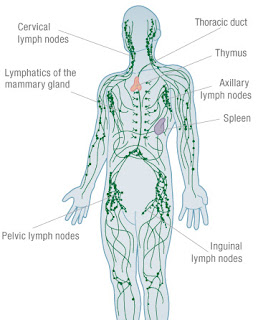
- Blood transports materials such as oxygen, hormones and nutrients. In order for the nutrients to reach the individual cells, tissue fluids are used. They surround the tissues, and act as a ‘middle man’ between the blood and the tissues. - The lymphatic system drains this tissue fluid away from the cells using lymph vessels. - Lymph glands pass to the lymph glands which act as filters. The glands contain many white blood cells. The glands may become swollen during an infection, due to increase production of white blood cells. - Lymph fluid pass on only one direction, because of the presence of valves (similar to veins) Functions of Lymphatic system - Transport tissue fluids back into the blood - ...
Carbon Cycle
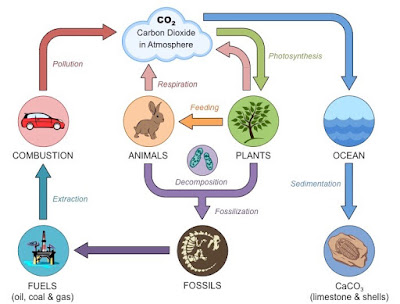
Points to note - - Usually, carbon does not exist alone. It forms molecules or compounds. E.g. it can exist as CO 2 and it is also a component of protein, lipids carbohydrates that found in living organisms - - Carbon enters the Carbon cycle through photosynthesis when plants, algae or some bacteria use carbon dioxide to manufacture food. - - Glucose made, contains carbon (C 6 H 12 O 6 ). The carbon is also used to make plant proteins, and lipids. Therefore, when animals feed on plants, the carbon is transferred to the animals - - Plants and animals undergo respiration, and the glucose (C 6 H 12 O 6 ) breaks down. Carbon Dioxide (CO 2 ) is then released into the atmosphere - - When animals and plants die, or release waste, then microorganisms will feed on the waste, and release...
Nitrogen Cycle
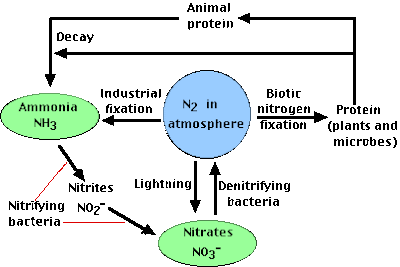
- - Nitrogen not used directly by living organisms - - Nitrogen gas constitute 78% of the air Nitrogen fixation This describes how nitrogen gas from the air is converted into nitrates. Plants use the nitrates as fertilizer. This occurs by two methods 1. Lightening : Lightening causes N2 gas to react with H2O molecules in the atmosphere and form ammonia and nitrates 2. Nitrogen fixing bacteria: some plants, especially leguminous plants, have bacteria living in their root nodules. These bacteria convert the atmospheric nitrogen to nitrates. E.g. of bacteria: Rhizobia Nitrification Animals and plants produce waste. Also, when they die, their body starts to decompose. Ammonia is released, which is then converted to nitrites. The Nitrifying bacteria, such as Nitrosomanas , convert the ammonia to nitrites, and the nitrites to nitrat...
Ecological Study Techniques

Click on the link below the view the YouTube video on this topic. Please subscribe to this channel .. thank you


Biology Notes
Hello everyone. Most of the contents be be posted on my new website. I will also be placing past examinations papers on my new website. Link : http://www.biologynotes101.com/index.html
Bones-Joints

Types of joints 1. Movable joints The bones of these joints are separated by a pad of flexible cartilage. There are two type of movable joints: a. Slightly movable joints: -are found adjacent between adjacent vertebrae. The cartilage between the joints (called intervertebral disc) absorbs shock. They can be displaced due to injury. Other e.g. Pivot joints: between neck and cranium. b. Synovial joints: the bones are held together by ligaments and are separated by synovial fluid. The fluid lubricates the joints, preventing the joints and cartilage caps of the bone from rubbing against each other. e.g. hinge joints: elbow, and knee ball and socket: at shoulder and hips 2. Immovable joints These joints are held firmly in position by fibers. They exist betwee...
Transport system in Plants

How the xylem vessel carries water ROOT PRESSURE Water that is present in the soil, is absorbed by osmosis into the root hairs of plants. The water then travels through the cortex of the root, from cell to cell. A root pressure is therefore created, and this forces water from the cortex into the xylem vessel CAPILLARITY Through capillarity, water moves up the xylem in a continuous stream. The water molecules are attracted to the walls of the vessels (adhesion) and they are also attracted to each other (cohesion). This cause an upward movement of water in the xylem, against gravity TRANSPIRATION PULL Transpiration occurs in leaves of plants. This loss of water causes a vacuum to be created in the xylem. There is therefore a high water pressure at the bottom, and a lower water pressure at the top of the xylem. Therefore, there is an upward pull of water.
Zika- How it affects infants
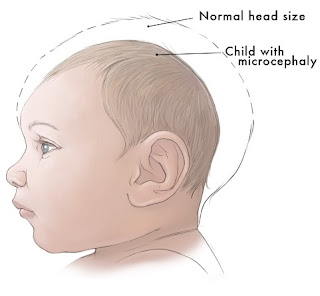
From my previous posts, it was mentioned that Zika rarely causes death, and hospitalization is also uncommon. So what is the most devastating effect of the Zika virus? It can cause microcephaly in infants. When the virus first began to spread like wildfire in Brazil, Doctors were not very certain of the implications. However, what was observed, was that there was a raising number of microcephaly in infants. Based on further investigation, a link was established between the virus and microcephaly. What is Microcephaly Microcephaly (my-kroh-SEF-uh-lee) is a rare neurological condition in which an infant's head is significantly smaller than the heads of other children of the same age and sex. Sometimes detected at birth, microcephaly usually is the result of the brain developing abnormally in the womb or not growing as it should after birth. Microcephaly can be caused by a variety of genetic and environmental factors. Children with microcephaly often have dev...
H1N1 flu-Swine Flu

What is H1N1 flu? H1N1 is a flu virus. When it was first detected in 2009, it was called “swine flu” because the virus was similar to those found in pigs. The H1N1 or swine flu is a respiratory disease caused by influenza viruses that infect the respiratory tract of pigs and result in a barking cough , decreased appetite , nasal secretions, and listless behavior; the virus can be transmitted to humans. The H1N1 virus is currently a seasonal flu virus found in humans. Although it also circulates in pigs, you cannot get it by eating properly handled and cooked pork or pork products Transmission Swine flu is transmitted from person to person by inhalation or ingestion of droplets containing virus from people sneezing or coughing . Symptoms Symptoms of H1N1 Symptoms of swine flu are similar to most influenza infections. Some symptoms are listed below: Fever (100 0...
Biotechnology

Biotechnology is the application of biological organisms, systems, or processes by various industries to help in the improvement of the value of materials and organism such pharmaceuticals, crops, and livestock (ASC-Chemistry for life). Biotechnology is not a new concept. It can be dated back to more than 6000 years ago (Biotechnology Industry Taken from: unidigest.com Organization) when man first began to breed and domesticate plants and animals. However, modern biotechnology involves more genetic engineering, where an organism's genome is altered. Because of this technology, Biotechnology may allow man to reshape the future of his planet. We may very well be able to reduce the imminent threat global climate change by modifying organisms so that they are better adapted to survive in their ecosystems, and improve quality of agricultural crops and livestock. With Genetic engineering, we may even be able to extend our lives, either by improving our diet and health care, ...